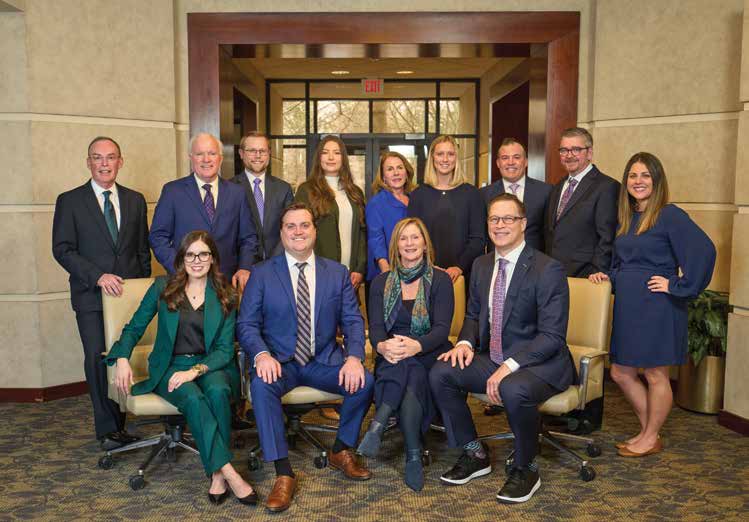
SOS Hand & Wrist Center Expedites Patient Care

By Molly English-Bowers

It’s been a busy few months at Syracuse Orthopedic Specialists’ Hand & Wrist Center. Last fall, physicians moved into new space on the second floor at 5719 Widewaters Parkway, DeWitt. And just over a month ago in March 2023, physical and occupational therapists moved into the same location. 

“Bringing everyone who treats hand, wrist and elbow injuries under one roof means better collaboration between therapists and doctors,” said director of hand therapy at SOS Benjamin Brightman, MS OT/L, CHT, of the move from 5823 Widewaters Parkway, East Syracuse. “It also allows patients to have easier, same day services. If a patient is being fitted for a custom splint and needs therapy the same day, we’re able to accommodate them more easily. It was more complicated for patients to leave one office and go to another. Our new location gives us and them immediate access, which is better for the patient. We’re better able to streamline our processes and have better protocols, so everyone on the team knows what is expected and what the outcome should be.” 

Now, when a patient sees a physician for a post-operative appointment, that patient can  cross the hall to visit PT or OT during the same appointment, if need be. Likewise, if a therapist needs a doctor’s expertise, a patient can walk across the hall. It’s comprehensive treatment in one location. Both departments share a waiting room, with doctor offices on one side and therapy offices on the other. 

The new hand center has two dedicated X-ray machines and state-ofthe- art equipment, allowing for a more efficient continuum of care and even better patient outcomes. 

The Hand & Wrist Center’s treatment team includes six fellowship-trained orthopedic hand and wrist surgeons and five certified hand therapists and assistants. One of those physicians, Devon Ryan, MD, joined SOS in August 2022 as the newest member of the medical team. He’s been very pleased with his transition to the practice. “Everyone working at the Hand Center, from the front desk to the other hand surgeons, has been incredibly accommodating and helpful, so getting my practice up and running has been as streamlined as possible.” 

“I think part of our expansion is population-driven within the broader Syracuse area, and with Amazon expanding and Micron on the way, our population will only get larger as more people move here for jobs ” said Ryan. 

Brightman has worked at the Hand and Wrist Center for almost six years. He supervises two occupational therapists and two occupational therapy assistants who treat more patients year over year. “There’s more awareness within the general population, so they seek care more,” he said. “We’ve grown every year that I’ve been here. Before we moved in, it was more complicated for patients to leave one office and drive to another. Our new facility gives them and us immediate access.”

Wrists and hands present a variety of conditions, both chronic, like Carpal Tunnel Syndrome and trigger finger, and acute, such as sprains and fractures. It’s that variety that appeals to Ryan. “I really like the complexity; there’s quite a bit of intricate anatomy involving the hand and wrist,” he said. “You work with all different tissue types—more than skin and bones.”

Among the conditions treated by physicians at SOS are ganglion cysts, finger dislocation, trigger finger and tendon injuries. Carpal Tunnel Release is the most common operation performed at SOS. In 2022, over 1,600 carpal tunnel surgeries were performed at The Specialists’ One-Day Surgery Center. The cause of Carpal Tunnel Syndrome, however, isn’t always as simple as occupational or repetitive motions such as typing at a computer keyboard.

“It’s hard to know for sure if those are the causes,” said Ryan. “What’s more clear is that those types of activities worsen the symptoms. I suspect that mild Carpal Tunnel Syndrome is more symptomatic than it was 10 or 20 years ago given the increasing usage of computers and smartphones. In addition, 30 to 40 years ago, the surgery for Carpal Tunnel Syndrome was a bigger deal; there was a larger incision and longer recovery.” 

Now most of these surgeries are endoscopic, with a single 1/2-inch incision in the wrist. “Recovery is often as short as a 2-3 days, which allows for a quicker return to work,” Ryan said. “Sometimes the full recovery can take a few months, but the typical patient sees almost immediate relief. A lot of patients, when they finally pull the trigger on Carpal Tunnel surgery, say they wish they had taken the leap sooner.”

Indeed, according to clevelandclinic. org, the success rate for carpal tunnel surgery is 95 percent. If you need treatment for hand and wrist ailments, contact the SOS Hand & Wrist Center at 315-251-3162 or visit sosbones.com. There you will find information on the center’s physician and therapy team, as well as conditions
treated. 


Left:  Devon J. Ryan, MD

Right: Benjamin Brightman, MS, OT/L, CHT

Seven Steps To Medicaid Compliance Program Readiness

By Maureen Dunn McGlynn

The mission of the New York Office of The Medical Inspector General (OMIG) includes enhancing the integrity of the Medicaid program by preventing and detecting fraudulent, abusive and wasteful practices within the Medicaid program. Pursuant to this mission, New York implemented compliance program requirements in 2009. Recently, amended regulations were adopted governing the implementation and operation of effective compliance programs for certain required Medicaid providers. These revised regulations include significant changes to the original regulations and will require affected Medicaid providers to review and revise their existing compliance programs. So, what steps should Medicaid providers take now to meet these new requirements?

1. Determine whether you are a required provider. As a condition of receiving payment under the Medicaid program, a “required provider” must adopt, implement and maintain an effective compliance program that satisfies the new regulations. “Required providers” include providers subject to Articles 28 or 36 of the Public Health Law, Articles 16 or 31 of the Mental Hygiene Law and managed care providers or managed long term care plans (MMCOs). Also included are providers who provide care services or supplies under the Medicaid program for which the Medicaid program is or should be reasonably expected by a provider to be a “substantial portion” of their business operations. A substantial portion of business operations means the provider claimed or received $1 million in any consecutive 12-month period, directly or indirectly from the Medicaid program.

2. Identify your risk areas. A required provider’s compliance program must apply to the provider’s risk areas. Risk areas are areas of the provider’s operations that are or should with due diligence be identified by the provider through its organizational experience. Areas of operations included in a compliance program must include billings, payments, medical necessity and quality of care, governance, mandatory reporting, credentialing, ordered services and contractor, subcontractor, agent or independent contractor oversight. An effective compliance program should be designed to be compatible with the provider’s characteristics (i.e. size, complexity, resources and culture) and be well-integrated into the provider’s operations.

3. Review and update your written policies and procedures and review them at least annually. Compliance programs must have written policies, procedures and standards of conduct accessible to everyone affected by the provider’s risk areas, including employees, chief executives and other senior administrators, managers, contractors, agents, subcontractors, independent contractors and governing body and corporate officers. The policies and procedures must describe compliance expectations, the provider’s fundamental principles, values and commitment to conduct its business in an ethical manner. In addition, the policies and procedures must include specific guidance on dealing with potential compliance issues, identify methods and procedures for communicating compliance issues to the appropriate compliance personnel and describe how potential compliance problems are investigated and resolved.

4. Appoint a compliance officer and plan compliance training. The compliance officer, who is not required to be an employee, reports directly to the chief executive or other senior administrator and periodically reports directly to the governing body. The compliance officer leads and coordinates the compliance committee, which is required to meet at least quarterly, have its own charter and consist of senior managers. Compliance training must be provided annually and must be part of orientation for new employees and occur promptly upon hiring.

5. Create and maintain effective lines of communication to ensure confidentiality. It is important that lines of communication directly to the compliance officer are publicized and available to all staff and Medicaid recipients of service by the provider, including a method for anonymous reporting of potential fraud, waste, abuse and compliance issues. With certain exceptions, the confidentiality of the reporter must be maintained.

6. Monitor and respond to compliance issues. A key component of an effective compliance program is a system for routine monitoring and identification of compliance risks. Monitoring activity results should be promptly shared with the compliance officer and appropriate compliance personnel. It is crucial that compliance issues are promptly investigated and corrected.

7. Take advantage of available resources. There are several resources available to assist in meeting compliance program obligations on the OMIG website (omig.ny.gov), including a compliance library, webinar, Compliance Program Review Module and OMIG’s Compliance Program Guidance. 


Maureen Dunn McGlynn is a member at
CCB Law, a boutique law firm focused
on providing counsel to physicians and
healthcare professionals. She can be reached
at 315.477.6276 or mmcglynn@ccblaw.com.

Medical Malpractice Insurance Expert Provides Tailored Risk Protection For Physicians

Jenn Negley, Vice President, National Healthcare Practice at Risk Strategies

By Becca Taurisano

For the past 30 years, Jenn Negley has worked in medical malpractice insurance, currently serving as Vice President of the National Healthcare Practice at Risk Strategies, a top, national independent specialty insurance brokerage firm. Along the way, she learned every facet of the business from managing accounts to production and brings that detailed expertise to her clients in New York state. 

With 6,000 clients representing over $120,000,000 in physician premiums nationwide, Risk Strategies represents every major medical malpractice insurance carrier in the market and offers programs designed for independent physicians, self insured programs, large practices and hospitals. In addition to medical malpractice, Risk Strategies provides managed care stop loss and reinsurance protection, property and casualty coverage and customized programs for employee benefit plans. “We are specialists with in-depth knowledge of healthcare and the carriers that serve the industry,” said Jenn. “That experience is beneficial for delivering the right protection for our clients so they can prepare for the unexpected.” 

Experts like Jenn ensure that providers have the necessary coverage in an everevolving field. If a provider were to go directly to an insurance carrier, they may not know all the questions to ask to make sure they are completely covered. Insurance brokers work to protect their clients but are paid directly by the insurance carriers. The coverage required varies by specialty, size of practice, and can even vary by provider within a practice. Jenn monitors issues that providers or practice managers may not consider, until a malpractice claim brings it to their attention. “That’s when it’s too late,” she said. “We are foremost advocates who know the specifics of your practice, make sure your coverage is appropriate, free up your staff for more important tasks, and provide cost effective coverage with the discounts you deserve from your carrier.”

Jenn is keenly aware of market trends that impact her clients. When office visits were down during the pandemic, she actively engaged practices to make the appropriate adjustments to their policies, so they were not overpaying for coverage when their income was impacted. Jenn also understands how to keep her clients in compliance with the terms of their malpractice policy. Restrictions on telemedicine appointments that were rolled back during the pandemic, are now being put in place again. If a provider doesn’t inform the carrier that they are still doing telemedicine, they might unintentionally void their coverage.

In New York state, working with medical malpractice insurance brokers is fairly new. “The state had been a closed market with a limited number of options for so long, that few practices were being provided the unbiased and independent market evaluations we offer,” added Jenn. As practices evolve, the coverage that worked a decade or more ago may no longer be sufficient. Risk Strategies works with every medical malpractice carrier in New York such as MLIMC, EmPro(PRI), The Doctors Company (TDC), HIC, and risk retention groups like MedPro RRG, Coverys RRG, ProAssurance RRG, TDC RRG, and AMS RRG. Jenn works with the carriers to determine what is the right solution for each client. While the New York insurance market is changing to be more physician-friendly, it is still difficult for providers to navigate alone. “As specialists, we are well versed in the benefits of the carriers we represent,” said Jenn. “One point of emphasis is always the financial strength of the carrier and the specific protection for the practice based on their needs.”

The Risk Strategies Healthcare Practice is currently rolling out a unique discount program for practice managers and administrators who are members of the New York Medical Group Management Association. The best-in-class protocols practice managers employ before a patient even sees a doctor are a front line in reducing claims. The program was approved at the end of 2022 and provides a 10% discount for physicians who qualify, potentially generating significant savings. “We are proud to bring this discount to NYMGMA members and look forward to assisting practices in signing up,” said Jenn. “Understanding our industry is what allows us to find creative ways to deliver premium relief.”.

For more information on insurance program for your practice, contact Jenn Negley at 267- 251-2233 or jnegley@risk-strategies.com.

Dannible & McKee, LLP:45 Years of Success

By: Elizabeth Landry

Front: (sitting left to right) Victor Vaccaro, Jr., CPA/ABV, CFF, CDA, Partner-in-Charge of Audit and Assurance Services; Nicholas Shires, CPA, Partner-in-Charge of Tax Services Back: (standing left to right) Christopher Didio, CPA, CFE, Managing Partner; Joseph Chemotti, CPA, CCIFP, Audit Partner and Chief Financial Officer; Peggy Rowe, CPA, CFE, Audit Partner and Partner-in-Charge of Accounting and Advisory Services

As the firm approaches its 45th anniversary this coming May, the team at Dannible & McKee, LLP is reflecting on the company’s evolution, growth and many successes over the years. Today, they are a leader among full-service CPA firms with headquarters in Syracuse, New York and additional offices in Schenectady, Binghamton and Auburn. The firm serves clients located not only in New York but across the United States and internationally. During its history, the team at Dannible & McKee has grown to over 100 professionals and support personnel, including 22 partners.

While the company has experienced much change and expansion throughout its history, the central foundational philosophy of providing high-quality service that places the client’s needs first was cultivated early on by the two founding partners, Anthony Dannible and Lance McKee. These pioneers in the CPA world broke away from a separate firm to begin their own company, because they saw that local businesses weren’t getting the quality of service they deserved. The client-centric service model they developed in 1978 laid the groundwork for success that has lasted decades into the future.

Christopher Didio, CPA, CFE and Managing Partner at Dannible & McKee, explained how the founding partners set up the firm for growth. “Lance was the audit partner, and Tony was the tax partner. They were a great combination, very hands-on workers with excellent marketing skills. Under their vision, they grew the firm to over 20 people in the first 10 years. Seven of our current partners have been with the firm for over 30 years, including Ken Gardiner and Mike Reilly, who served in key management roles that helped continue to grow the firm which they are still an important part of today. Tony and Lance also laid the foundation for key internal department meetings that we still maintain. We spend a lot of time making sure we keep people properly scheduled to balance the workload and effectively service our accounts. Many principles they brought into place 45 years ago are still followed today. That’s made our firm a great place to work,” he said.

Hands-On Service Model for Client Success

Similar to other international accounting firms, Dannible & McKee is structured into three separate departments: audit and assurance, tax and accounting, and advisory. Additionally, professionals in the firm focus on industry niches that allow them to provide specialized knowledge for each unique client engagement. Some specific areas of expertise include business valuations, ownership transition plans, mergers and acquisitions, forensic accounting, federal acquisition regulation (“FAR”) audits, employee benefit plans, trusts and estate planning, and many more.

Due to the wide array of services offered, the firm is able to serve a diverse client set of large and small entities in many different fields, including, but not limited to, manufacturing companies, construction contractors, architecture and engineering firms, professional service firms, auto dealerships and nonprofit organizations. As a registered firm with the Public Company Accounting Oversight Board (“PCAOB”), Dannible & McKee has become a recognized leader among PCAOB accounting firms by providing accounting, auditing and tax services to publicly-traded companies.

Although Dannible & McKee offers many services to a plethora of organizations, the firm is diligent in ensuring its high quality of service and attention to each client’s unique needs remains the same regardless of which specific services clients utilize.

“The biggest differentiator for Dannible & McKee is the quality of our service and our dedication to our clients. It’s one of the things that every CPA firm likes to say and put on its website, but we see that for us, it’s true. The quality of the work we do for our clients is unmatched among the other CPA firms we compete against. We provide hands-on service, going out into the field as a team with our clients, and that level of service is really what sets us apart. We tell clients that they’ll receive this level of service, but then they’re surprised when they actually do,” explained Victor W. Vaccaro, Jr., CPA/ABV, CFF, CDA and Partner-in-Charge of Audit and Assurance Services.

The firm’s emphasis on hands-on service is demonstrated by the fact that every engagement involves both a tax partner and an audit partner. Additionally, the professionals in the tax department demonstrate a high level of partner engagement year-round, rather than only at the traditional “tax time.”

“Part of the client-centric approach is that we’re proactive throughout the year. Many folks think of accounting as ramping up only after year-end, preparing the financial statements and the tax returns, and that’s the end of it. However, that’s not the way we operate. For us, it’s a year-round approach. We take the time to understand the intricacies of a client’s business and the issues affecting their tax position. This allows us the opportunity to provide thorough, timely and tailored tax planning and compliance services,” said Nicholas L. Shires, CPA and Partner-in-Charge of Tax Services.

True Ownership Transition for Employee Success

Of course, without strong professionals on the team, Dannible & McKee wouldn’t be able to deliver a high level of value to its clients. Remaining true to another standard put forth by the firm’s two founding partners, Dannible & McKee offers a clear career path and follows through on the transition of ownership to reward and retain its strongest employees.

“Some of our competitors don’t transition ownership. They have people that grow through the firm and receive new titles, but they don’t make them equity owners in the firm. As a result, they just don’t retain the strongest people. By truly transitioning ownership, we’ve been able to maintain a really strong team, including those at the partner level and also those under the partner level that see the opportunity in the future to be owners in the business. It’s a plan that has a defined path that our personnel can move along so they know they’re making progress. That progress helps them to perform well for the firm and also shows them that they’re taking steps to achieve their professional goals,” said Vaccaro.

For the majority of the current partner group at Dannible & McKee, the beginning of their career path with the firm started right out of college. To continue this trend, the firm’s emphasis on recruiting and retention of strong, dedicated employees starts much earlier on than is traditionally seen among similar companies. Dannible & McKee’s college internship program is available to college students as early as the second year of their five-year-long education program.

Didio explained how the firm has seen much success from structuring the internship program in this way. “Last summer, we had seven interns on the accounting side that were in their fifth year of school. We gave job offers to all of them, and all seven accepted. That shows the strength and success of our internship program. We’re not just looking at college seniors for internships – we’re being a bit more proactive than other firms. We commit to that investment earlier on in the interns’ college careers,” he stated.

Once hired onto the team, employees at Dannible & McKee experience many benefits, such as flexible work schedules, remote work, continuing education support, employee gathering events and bonus opportunities.

Joseph Chemotti, CPA, CCIFP, Audit Partner and Chief Financial Officer at Dannible & McKee, shared how this emphasis on elevating the employee experience at the firm has been an intentional effort. “One thing we’ve truly focused on over the last five-plus years is our group of employees. It’s the employees that put us where we are. They are what has helped us grow to where we are today and are what help us continue to succeed and grow,” he explained.

Continued Expansion Into the Future

The firm’s focus on the well-being of its employees has contributed to much of Dannible & McKee’s continued success in the New York State community and beyond. In many ways, the flexibility enjoyed by the firm’s employees has led to a natural growth of the company’s physical locations outside the boundaries of Syracuse.

Peggy J. Rowe, CPA, CFE, Audit Partner and Partner-in-Charge of Accounting and Advisory Services, recalled how one employee’s journey led to the firm putting down roots in the Capital Region. “The expansion into Albany started with one of our tax managers wanting to move back to Albany because of personal family reasons but didn’t want to leave Dannible & McKee. She worked out of her home for quite a few years until she was able to grow the business in the capital region and eventually became a partner at the firm. As a result of that success, we now have an office in Schenectady with several key professionals on our audit and tax team,” Rowe said.

Another way Dannible & McKee continues to grow is through referrals from other local businesses and mergers with other CPA firms. The firm recently merged with Buffington & Hoatland CPAs, PLLC, a smaller firm based in Auburn, New York, gaining two new partners and five accountants in the process.

“Buffington & Hoatland could have picked any firm in Central New York to merge with. They came to us because of our reputation. They knew the quality of our work and how we treat our employees, and they picked us as the firm they wanted to merge with. They’re successful partners and now they’re members of our team. That’s the message out in the community – we’ve gotten several client referrals from other CPA firms, as well,” stated Didio.

Dannible & McKee has also received many referrals over the years via its affiliation with the GGI Global Alliance (“GGI”), a world-wide alliance of well-established and experienced accounting, consulting and law firms. The firm has been a member of GGI for over 10 years, and this membership has brought many opportunities to work on international engagements.

In the future, the team at Dannible & McKee hopes to participate in additional mergers and acquisitions, further expand into New York State and beyond, and continue to broaden the scope of its service offerings. The firm plans on growing its services provided to publicly-traded companies, specifically, since it is one of the only local CPA firms registered with the PCAOB.

Certainly, no matter what’s in store for Dannible & McKee over the next 45 years, the firm intends to remain firmly rooted in the philosophy of its founding partners that have delivered so much success already. As Didio puts it, “For our founders, there were two key principles: servicing your clients and technical expertise.” With these principles guiding the way, Dannible & McKee will continue to flourish for years to come.

Attracting & Retaining Top Talent

By: Mike Metzgar, Business Development Manager, TDO

Nationwide, the US manufacturing labor market is facing significant challenges. With approximately 10,000 baby boomers retiring every day until 2028, the situation is only set to worsen over the next five years, creating a significant skills gap, loss of tribal knowledge, and a shortage of experienced workers. This will result in fierce competition among companies for top talent and will make it more challenging for businesses to attract and retain employees. Here in Central New York with Micron moving in and the I-81 project getting underway, the future workforce challenges are arriving sooner. While compensation is important, it is not the only factor that motivates employees. Here are a few strategies to attract and retain employees that do not rely solely on money:

  1. Provide Opportunities for Growth and Development: Offering opportunities for growth and development is
    an effective way to attract and retain employees. This includes training, mentorship, and professional development programs that enable employees to enhance their skills and advance in their careers.
  2. Build a Positive Company Culture: A positive company culture is a critical factor in attracting and retaining employees. Building a culture that fosters teamwork, respect, and communication can make employees feel valued and engaged. Encouraging a healthy work-life balance and recognizing employee contributions can also help build a positive company culture.
  3. Offer Flexible Work Arrangements: Offering flexible work arrangements, such as remote work options or flexible schedules, can be an effective way to attract and retain employees. This provides employees with greater flexibility and can help them achieve a better work-life balance.
  4. Focus on Work-Life Balance: Work-life balance is a top priority for many employees. Companies that prioritize
    work-life balance by offering generous vacation time, paid time off, and parental leave policies are more likely
    to attract and retain employees.
  5. Create Opportunities for Employee Engagement: Employees who feel connected to their work and company
    are more likely to stay. Creating opportunities for employee engagement, such as team-building activities
    social events, and volunteer opportunities, can help employees feel connected to their company and their
    colleagues.

Obviously, the practicality of these strategies is highly contextual to your particular work environment. If remote or flexible work is impossible, there are always more strategies (e.g., prioritize communication and feedback, emphasize employee wellness, recognize and reward employee achievements, offer meaningful work, provide a sense of autonomy, etc.). However, the good folks at the Arbinger Institute would argue that deeper than any of these strategies is your mindset. If you consistently view your employees as individual people with lives, families, obligations, hopes, and dreams, things will generally have a way of working out even when you make mistakes. Conversely if you view your employees more as objects, even if you pay them well, you will find attraction and retention increasingly challenging in a worsening market.

In conclusion, attracting and retaining employees has always been important for the success of any business. However, over the next few years, this very well may be the biggest issue for your company’s success/survival. Companies that already do this well can weather the coming storm. Those that do not should begin working on their culture and practices now to ready themselves. Remember, while compensation is important, there are several other strategies that companies can employ to attract and retain employees. The key in selecting the best strategy for your environment is to consider the people themselves and make your decisions with them at the forefront of your mind. If you are a small or mid-size manufacturer and need some assistance with this (or really any) issue, TDO’s team is fully certified to help. Reach out today to learn more and schedule a free consultation.

The Financial Services Industry is Yet Again Under Fire, And it Should Be…

By: Jason D. Nickerson, CFP®, EA, President & Chief Operating Officer, John G. Ullman & Associates

When will we learn? When will we as consumers take matters of choice back into our own hands? Choice is about the only thing in our control and yet we make decisions fleetingly with minimal research. We make choices about our financial lives based on 30 seconds of research or quickly trust companies twisting and turning the latest industry compliance buzz words meant to protect us as sales pitches. The recent news of bank failures and other financial services companies being questioned has me troubled, infuriated, angry.

I am not in the banking industry so I have no business using this article as a platform to attack those in the industry. However, I am a 25-year vet of financial services and I am going to use this platform to take a stand. Enough with the over use of the term “fiduciary” and the phrase “comprehensive wealth management” if that is not what is provided. How does this tie to recent troubles in financial services? Because I believe that our personal financial matters tend to rank second on our life priority list only behind our family’s mental and physical health. And with that level of importance placed on that area, we quickly enter into relationships with financial services firms being sold on something that is not there.

I want to start with fiduciary. The technical definition includes the word trust. My favorite analogy comes from one of my industry hero’s, Michael Kitces. He talks about it like this; “Suitability means selling a suit that fits you. Fiduciary duty means it actually has to look good on you too.” Anecdotally, I hear professionals recommending things that, in their minds, can make a case that they fit this description. Then when the consumer actually figures out the recommendation, some amount of time later, they see that they do not like what they got. Stop mixing suitability and Fiduciary Duty. They are different, very different. I like to use the phrase “a true fiduciary relationship.” Why? Because I know in the end the only thing I have to sell is a relationship. Yes, we benefit the longer the client stays with us, but then again, we both do.

Comprehensive Wealth Management. Used in pieces or all together, it is often used wrong. Maybe vainly, I will quote a blog I wrote a few years back called “What is CWM?”

“We find that this is more than the returns in our portfolios and cutting edge tax strategies. It is about the decision making that goes into creating a path for us that leads to comfort and peace of mind. It’s about protecting that for which we have worked so hard. It is about optimizing what we have and what we will build. It does not mean getting the most, but making the most of what we get and making decisions that are suitable for what we are hoping to achieve.
Some companies will say they offer this approach. If you come across them, I ask that you dig in and understand what they are offering. Is the first thing they ask for your account balances or what insurance policies you own? Or do they ask about you, and what is important and valuable to you? Do they run all sorts of fancy calculations and hand you a big binder and send you on your way? Or, do they partner with you to implement the decisions you have made after discussing various options and providing education on the pros and cons.”

And I continue…

“Wealth denotes how we hope to help our children in various phases of their life be it education, embarking on a career, or starting a family. Wealth refers to peace of mind knowing our aging parents are well taken care of as they move into their “golden years.” As you can see, Wealth is not just about our account balances; it is about the things we have a high value for and obtaining peace of mind around them.”

For a bonus round, I will attack cost or pricing. First, most consumers don’t know or don’t understand the full cost of their financial relationships. Do your research and ask your questions. Second, I don’t think anyone would choose a surgeon based on how low the cost might be.

Why do we do this with our financial matters? I have a colleague that puts it in a “digestible” way (pun totally intended). “We can eat the low cost food from a fast food chain for every meal, but we know that is not healthy for us.”

Rant over. Don’t expect financial services firms to change their ways, you as consumers need to change yours. Your personal financial well-being is important. Stop making choices based on buzz words and cut rate pricing. Stop chasing more return and fancy schemes. Find a partner that understands protecting what you have built is more important than growing it. You can’t grow what isn’t there. Find someone that understands that financial freedom is about choice of how we spend our time and not dollar signs and investment returns. Take back the power of choice, especially in your financial relationships.

Mental Health in the Workplace

By: Elizabeth Landry

Over the past several years, many in the U.S. have suffered poor mental health and suicide rates have remained steady. Working people tend to be affected by these issues at a high rate. A rise in remote employment leading to feelings of isolation as well as high-stress, fast-paced work environments are contributing factors to these patterns.

According to Dr. Omar Colon, Medical Director of Behavioral Services at Oswego Health, there are several warning signs employers can monitor for to help recognize workers who may be suffering and at risk for suicide. Arriving late to work, working excessive hours, increased stress at work or at home, mentioning access to weapons and generally any behavior out of the norm for a specific person are all red flags indicating an employee may be suffering poor mental health.

Addressing these issues in the workplace can seem daunting due to the unfortunate stigma that often surrounds mental health and suicide. However, Dr. Colon emphasized it’s important for gatekeepers in the workplace, such as managers and HR personnel, to help break down this stigma by simply asking their employees how they’re feeling and offering a welcoming environment where workers can feel comfortable having discussions about what’s happening in their lives.

“When we see these red flags in our work, we have to pay attention as gatekeepers and be ready to receive these messages. We need to be thinking, ‘Wait a minute – does this person need some help? Are we making it easy for this person to access the help they need?’” explained Dr. Colon.
In addition to identifying when employees may be at risk for poor mental health or even suicide, employers can strive to boost mental well being in the workplace by encouraging employees to practice good mental health habits when they encounter stressful situations.

“We’ve been focused on creating a culture where it’s OK to take a break from stress at work and come back refreshed, even if that means just a five-minute walk,” said Alissa Viscome, Employee Engagement Manager at Oswego Health.

The COVID pandemic has also created additional mental health-related difficulties in the workplace. An increase in remote employment, virtual meetings, masks and physical occupancy limitations have all made it more difficult for employees to create important bonds with one another.

The staff at Oswego Health has been working to create more opportunities for employees to connect with one another, even if those connections must be virtual. Employees at Oswego Health have participated in activities like sharing photos of pets with one another on National Pet Day and collectively taking part in self-care opportunities during the different themed months of the “Action for Happiness” calendar. Although these initiatives may seem simple, they can make a big impact that encourages interpersonal connections and helps boost mental wellness among teams in the workplace.

Residents of Oswego County and beyond can find treatment resources at one of several inpatient and outpatient facilities, including the brand-new Lakeview Center for Mental Health and Wellness. Additionally, the Oswego Health website offers a Wellness Library where employers can find educational awareness articles about mental health and suicide as well as practical tips to help support general mental well being both in the workplace and at home.

Insurance Rates –What Is Really Going On?

By: Pierre Morrisseau, CEO, OneGroup

I’m sure you have noticed that the cost of insurance has been rising rapidly, far outpacing the general inflation rate. Understandably, business leaders are not only upset about this, they are downright angry. Some may feel their local agent is not working hard enough to find lower cost coverages. Others believe their insurance companies are gouging them. So, what is really going on?

First, your agent typically works hard to find the best risk protection for your unique circumstances at the best possible price. Still, in the end, your agent is only the messenger. While a competent agent can impact coverage and price by doing their homework to put your company in the best possible light with insurance companies, they are at the mercy of the carrier’s pricing or its decision to provide any coverage at all.
On to the insurance companies. They exist as businesses specializing in spreading the risk across a very broad market. As businesses, they need to make a profit to survive and to keep future premiums in check. In turn, they also require purchasing insurance for the risk they assume from their customers. This is known as reinsurance. Reinsurance companies face the same challenge as the carriers they underwrite. When their losses increase due to climate change, wars, catastrophic events and higher interest rates, those costs are passed on to the insurance carrier who in turn passes them on to the consumer.

The question still remains: why are insurance rates going up so fast and so high? The short and simple answer is inflation. Continuously rising inflation in everything from labor to home values to vehicle cost to product pricing—combined with quickly rising interest rates has dramatically increased the value of each loss. Those payouts must be recouped through higher premiums. But that is only half of the story—literally.

The insurance industry is indeed coping with high general inflation, but it is also greatly impacted by what is known as social inflation. While not new, the impact of social inflation has spread rapidly over the past decade and more dramatically since the pandemic.

The “social” component of the name defines the nature of shifting societal perceptions such as negative views of corporations, insurance companies and business leaders through perceived earnings gaps and the belief someone must pay. As a result, juries and judges are awarding larger and more frequent awards in suits against both companies and their insurance companies. Trucking is a prime example of the direct impact of social inflation. Commercial trucking is a sector most affected by frequent lawsuits and higher awards. According to a recent study by the American Transportation Research Institute, from 2018 to 2021, the size of awards grew 33% annually even as general inflation only grew 1.7% and healthcare costs grew just 2.9% annually.

Additionally, social inflation has advanced in the form of third-party litigation and third-party litigation funding. According to Bloomberg, the funding of lawsuits by international hedge funds and other litigation funding/lending with no stake in the outcome except to collect a portion of the settlement, has become a $39 billion global industry.

Third-party claims of a different flavor are badly damaging the Florida insurance market and stressing Florida homeowners. Assignment of Benefits (AOB) is an agreement that transfers the insurance claims rights and benefits of the policy to a third party that can file a claim and collect insurance payments. This has led to rampant fraud as contractors and public adjusters scramble to collect AOBs then work with a lawyer to bring suit against insurance companies if they refuse to pay exorbitant repair and replacement costs. According to the Insurance Information Institute, there were about 1,300 AOB lawsuits in Florida in 2000. By 2013 there were 79,000 suits and projected to be about 130,000 property claim lawsuits excluding any impact from Hurricane Ian. All told, as of January 22, six Florida insurance companies had failed and several others were being watched closely or downgraded.

Putting this all into perspective, we are likely to see continued general and social inflation which will further drive up the cost of all forms of insurance. Still, there are ways of controlling the cost to businesses by fully investigating your cost drivers attached to risk, mitigating or eliminating risk where possible, and working with a competent insurance professional who can craft a compelling, positive assessment of your risk to present to your insurance carrier.

Training the Next GenerationConstruction Worker

By: Earl Hall, Executive Director, Syracuse Builders Exchange

Earlier this year I reported on the opportunities and challenges in the industry over the next few years. With an abundance of anticipated work and labor shortages impacting employers’ ability to bid or perform the work, project owners will rely upon the innovative solutions construction contractors adopt to deliver completed projects on time and within budget.

My last article touched upon the labor shortage but did not provide details or solutions on what leaders in our community and industry are doing to address how to attract and retain the next generation construction worker.

Years ago, the Syracuse City School District (SCSD) launched their Career and Technical Education (CTE) program, with approximately 14 career pathways supplementing core class requirements such as math, science, etc. One of the first pathways was Construction. As a SCSD CTE Advisory Board member, helping SCSD start the construction curriculum was rewarding and timely. Today, the SCSD’s construction curriculum is being recertified by the New York State Department of Education, and used as a model for other suburban school districts which will launch their own construction career pathway program beginning in the fall of 2023.
Beginning in the fall of 2023, the SCSD will add to the construction curriculum a replica of the Syracuse Builders Exchange’s (SBE) electronic plan room, courtesy of Barryhund, SBE’s e-plan room software developer. This educational platform will include all of the features of the e-plan room, but will only have a few projects for the teachers and students to work with, including actual SCSD building projects which have already been completed.

The new STEAM (Science, Technology, Engineering, Art, Math) is scheduled to open in September 2025 for students from the SCSD and suburban school districts. Over the past year, executives from construction management firms have been working with SCSD curriculum writers to develop the new construction management career pathway curriculum which will be launched in 2025. This curriculum will also include SBE’s e-plan room technology which is used by over 900 companies and thousands of their employees throughout the year.

Union training funds have been investing in attracting and retaining future construction workers into their trades, evident by the increased use of technology to identify and attract candidates. Many of the trades training funds have turned to social media, internet marketing, on-line hiring applications and other technologies to reach the younger generation. The investments have paid off with new entrants into apprenticeship programs, which is leading to new investments into enhanced training facilities. Such examples include a 12,000 square foot expansion to the Carpenters Local 277 training facility in Liverpool and the anticipated new construction of the Laborers Local 633 training center in East Syracuse.

It remains a pleasure to be heavily involved in the many exciting initiatives throughout central New York that are leading to new and younger people entering the construction industry. While there remains much more work to be done, including working with the Utica Central School District later this year to launch their new construction career pathway program, the measurable results from the above efforts and programs remain encouraging. Collaborating with school administrators, construction industry executives and utilizing technology have all enhanced the construction industry’s ability to become more attractive to high school students who have a desire to begin a career as a next generation construction worker.

In my next report, I will share an amazing story about an Afghanistan immigrant who came to the United States legally, with nothing more than the clothes on his back and an incredible desire to achieve his dream of becoming a project manager of a premier construction company.

Lovell Safety Management Co., LLC logo

The Schoff Group of UBS: Ready to Partner with You

By Elizabeth Landry

Just over an hour outside of Syracuse, in a nondescript office park nestled in a Rochester suburb, The Schoff Group of UBS Wealth management is celebrating.

It’s mid-January, and Forbes has just released their annual list of Best-In-State Wealth Management Teams to which they were named. Required disclosure, the Forbes rating is compiled by SHOOK Research and awarded annually in January, based on information from a 12 month period ending March of the prior year. Eligibility is based on quantitative factors and is not necessarily related to the quality of the investment advice.

After nearly three years of remote work, the team is finally back together in the office and ready for some celebratory cake.

For over thirty years, The Schoff Group has carved out a distinguished reputation in wealth management by serving high-net worth families, corporate stock plans and not-for-profit organizations. Founded by Managing Director and namesake Bill Schoff, and led with Senior Vice President Katie Titus, the team is comprised of 13 multi-generational members, and has nearly $3 billion in assets under management as of December 31, 2022. Schoff describes their philosophy as not product-oriented, but solutionoriented, and attributes their success to an ability to recognize and fill gaps in the marketplace.

 Partnership Culture

One such recognition was realized in the Fall of 2021 when the group formally added Institutional Consultants Michael Valenti and Samantha Maley. The team had been working with institutional clients of all kinds for years but would often have to outsource business to other specialist teams at the firm. Years of working with corporate stock option plans showed Schoff the value in providing a fully integrated service offering and when the opportunity to add an institutional-specialist team arose, it felt like fate.

“For years, our team had provided high-level wealth management for high and ultra-high net worth families, entrepreneurs, and corporate executives, and we focused on executive stock plans at public companies. The addition of these two top professionals offered us the opportunity to reach a broad array of clients in the institutional marketplace without having to outsource… the synergies there are fantastic. Frankly, I don’t know of another team in the country that offers everything that we offer in a one-stop shop,” says Schoff.

Valenti and Maley were enthusiastic about joining the team. “Our goal is to have true relationships in this business, not just with clients but within our team. It’s not enough to simply work together… the magic happens when everyone feels like they’re rowing in the same direction. It was immediately apparent that The Schoff Group had built their team on the same principles” Valenti said.

“Mike” and “Sam” had spent the majority of their careers working for a Rochester-based money manager where they developed their relationship-centric approach to client interactions. They focused primarily in the Central New York region serving high net worth individuals, endowments and foundations, hospitals, religious organizations, construction trades unions, contractor business owners and everything in between.

Maley looks back at this time with great fondness. “Mike put who knows how many thousands of miles on his car, visiting clients daily…up and down the NYS Thruway…Syracuse, Utica, Binghamton, repeat…pick any town and he can tell you the top three Italian restaurants there! He always insisted on having in-person interactions when he could, and no destination was too far or request too mundane to be there for a client.”

The depth of relationships forged during this time, and the recognition that those clients had a diverse set of needs soon led the Valenti/Maley team to seek out industry partners that could provide the sophisticated solutions required. They were already acting in a consultative capacity for many of their relationships but could only offer a limited set of investments and services.

“Having the ability to problem-solve and design portfolios that were not bound to one investment manager was really attractive to us,” said Valenti.

The move to UBS and Schoff’s team made perfect sense.

Business Better than Usual

As one of the largest wealth management firms in the world, UBS has all of the resources one expects from that descriptor; teams of research analysts conducting manager due diligence, cutting edge financial planning software and cybersecurity protocols, a staggering array of investment choices.

The combination of world-renowned resources and a boutique firm delivery model set the firm, and this team, apart. 

“Our ‘product’ is our team and our service. Our job is to listen to a client’s individual needs and connect them to, not sell them, a solution,” Maley says. “Katie calls it ‘business better than usual’.”

The team represents the best of what the financial services industry has to offer, comparable to teams in cities like Boston, New York, Chicago but focused on the regional community.

“The local aspect of it is very important because our business is based on relationships. We think that in order to have a truly trust-based relationship, you have to feel comfortable and confident that the person knows and understands your situation and is there physically to provide support. So many of our competitors are Zooming in for meetings once a quarter at most, they’re not on the ground in the territories they serve. None of the contractors or trade unions we work with could do their jobs virtually, and neither can we,” Valenti explained.

One particular area of focus is in educating clients on all of their financial services related options. Years of experience have revealed a desire amongst clients of all types for education. Whether it is helping employees understand their compensation and stock benefits, a small business owner to optimize their retirement plan structure, families wealth plan for generations, or a new plan trustee to understand their fiduciary duties, the team prioritizes learning and growing alongside their clients.

Titus likens the team’s particular set of investment and financial knowledge to the specialty knowledge and training required in the construction trades. “You get the best welders, electricians, plumbers, etc.… and everyone comes together to produce the best product. What we’ve done is bring together those same specialists in our various lanes and we can provide a truly comprehensive solution,” she said.

Future-ready: A Multigenerational Team for Multigenerational Clients

The recent additions have not only expanded The Schoff Group’s suite of service offerings but strengthened an already flourishing multigenerational dynamic. Senior teammates have an industry average of more than 30 years and bring that experience to bear mentoring colleagues.

“We want clients to feel that they have a relationship with the whole group, not just an individual, Schoff says. “None of our awards or recognition can be credited to one person alone, so developing a deep bench of talent is a huge priority.”

In some cases, succession plans have been in the works since the team’s inception. Second generation member Bryan Schoff has taken a prominent leadership role and is at the forefront of innovation for client portfolios.

“We know circumstances  are constantly changing- in the markets and for clients individually. We’ve been able to utilize technology not to depersonalize our service, but to make the intensity of it more scalable,” he says.

Titus emphasized the importance of succession planning in sustaining a business’s success. “Construction businesses are oftentimes family owned and they pass from one generation to the next. Skills are honed over time and passed down, while incorporating new ideas and technology. Our business is the same. The generational diversity brings breadth and depth to our organization. We have longer-tenured folks like Bill, Steve, Barb, myself who can mentor newer peers, and in turn the newer members bring a fresh perspective and identify with clients in a different way.”

That generational connection is key for the group to prepare for one of the largest wealth transfers in history, as baby boomers move out of the workforce and into their later years. Bryan says they are cognizant of what this portends for clients’ changing needs. “We’re constantly educating ourselves for the next stage, estate planning, cash flow modeling… and using our tech. tools to enhance oversight, efficiency, and most importantly, communication.”

Beyond their daily collaboration, the group meets weekly to discuss topical items and strategize, staying ahead of the curve. As she looks toward the future, Titus muses on the possible challenges ahead. Market volatility, ever-changing tax codes, inflation uncertainty… tough conversations broached with clients daily.

“I think the idea of developing a partnership with clients really sprung from a desire to make them feel like we were in it together. To help put them at ease in uncertain conditions… to always answer the phone, be proactive, and really understand every individual circumstance. We have witnessed a yearning in the marketplace for a high-touch model. That should be the industry standard, and we lead by example,” Titus says.

Bolstered by adding Valenti and Maley, The Schoff Group is poised for growth. The group will continue to bring its talents to clients across the country, while contributing to their local community.

“Apart from just growing our business, a big goal of ours is to become an even greater member of the community,” said Maley. “We want someone to read our names or see our faces and know they are in excellent hands. There’s no reason the talent of our team should be a well-kept secret! We would love to count everyone reading as clients in the near future, and we’re ready to start logging miles again.”

For more information on third party rating methodologies, please visit ubs.com/us/en/designation-disclosures

The Schoff Group are Financial Advisors with UBS Financial Services Inc. a subsidiary of UBS AG. Member FINRA/SIPC in 400 Linden Oaks, Rochester NY 14625. The information contained in this article is not a solicitation to purchase or sell investments. Any information presented is general in nature and not intended to provide individually tailored investment advice.  Investing involves risks and there is always the potential of losing money when you invest. The views expressed herein are those of the author and may not necessarily reflect the views of UBS Financial Services Inc.  Neither UBS Financial Services Inc. nor its employees (including its Financial Advisors) provide tax or legal advice. You should consult with your legal counsel and/or your accountant or tax professional regarding the legal or tax implications of a particular suggestion, strategy or investment, including any estate planning strategies, before you invest or implement. As a firm providing wealth management services to clients, UBS Financial Services Inc. offers investment advisory services in its capacity as an SEC-registered investment adviser and brokerage services in its capacity as an SEC-registered broker-dealer. Investment advisory services and brokerage services are separate and distinct, differ in material ways and are governed by different laws and separate arrangements. It is important that you understand the ways in which we conduct business, and that you carefully read the agreements and disclosures that we provide to you about the products or services we offer. For more information, please review client relationship summary provided at ubs.com/relationshipsummary, or ask your UBS Financial Advisor for a copy.